ENDOMETRIOSIS.
On this Menstrual Hygiene Day, we will be addressing a menstrual disorder that is causing a lot of girls and women to suffer but is seldomly talked about. This menstrual disorder is called Endometriosis. Endometriosis is derived from the word, Endometrium. The endometrium is a tissue that lines the uterus. In endometriosis, tissues that mimic the real endometrial tissues, grow outside the uterus. They usually grow on other reproductive organs inside the pelvis or the abdominal cavity. During menstruation, when the actual endometrial lining sheds blood, the ‘copy’ endometrial tissues growing outside the uterus also respond to the hormonal changes associated with menstruation and shed blood in the pelvis. Since the blood collected in the pelvis has no outlet, it results in inflammation, swelling and scarring of the normal tissues surrounding the outgrowth.
Endometriosis is very difficult for doctors to diagnose because several girls and women experience painful menstruation (dysmenorrhea). Also, the condition manifests itself in different ways and shares similar symptoms with other conditions. Some girls and women do not show any symptoms. The severity of the pain is also not directly related to the severity of the disease. A person with a mild condition may experience severe pain than another with a severe condition. The surest way to diagnose endometriosis is to do a Laparoscopy, which is also a treatment technique for endometriosis.
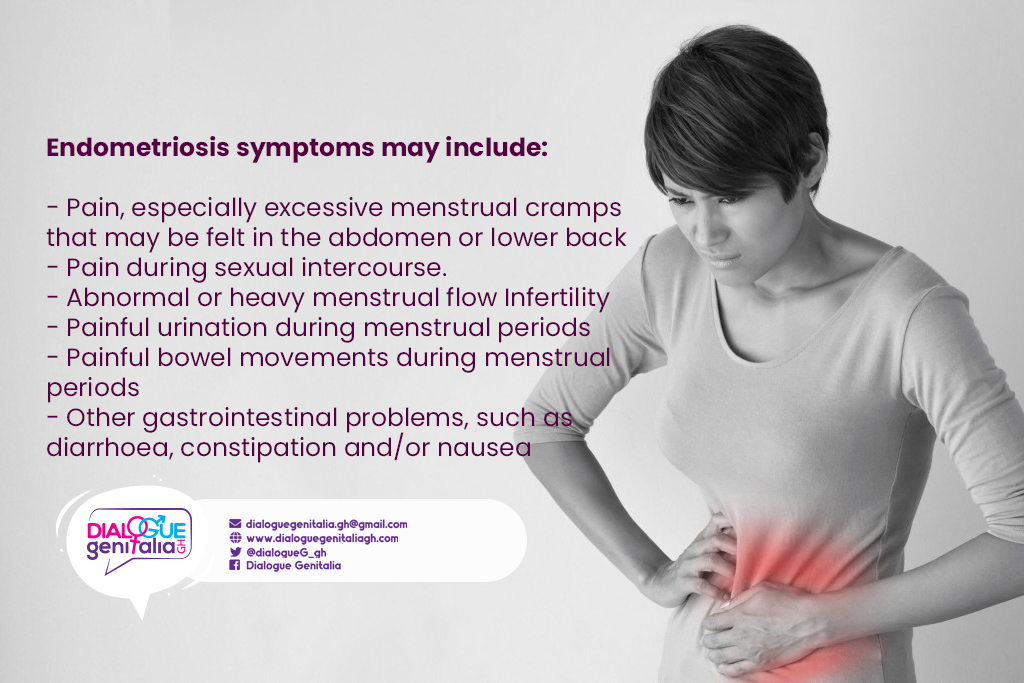
Endometriosis symptoms may include:
- Pain, especially excessive menstrual cramps that may be felt in the abdomen or lower back
- Pain during sexual intercourse.
- Abnormal or heavy menstrual flow
- Infertility
- Painful urination during menstrual periods
- Painful bowel movements during menstrual periods
- Other gastrointestinal problems, such as diarrhoea, constipation and/or nausea
To ease the pain of endometriosis, you may:
- Rest and Relax
- Use a hot water bottle or heating pad on your abdomen
- Take warm baths
- Get regular exercise
- Prevent constipation
- Have a nutritional approach
One thing some Ghanaian mothers are fond of saying in response to the complaint of having menstrual pain is that “it will stop when you give birth”. This is not at all helpful because there might be a more serious underlying condition to blame for the menstrual pain. No girl or woman should be left to deal with excruciating pain and hope to be cleared from it when she gives birth. Let us learn the habit of seeking medical help when a girl or a woman is experiencing severe menstrual pain. You will never know what the exact problem is until you seek medical help. Mothers, encourage your daughters, support them and get them help. Fathers, help the mothers in this role. Ladies, let’s be supportive to each other during that time of the month and always. Let’s stop trivializing another woman’s experience just because we are lucky not to feel it ourselves. Also, do not hesitate to reach out to the DGG team if you or anyone you know needs any assistance. The DGG team would like to say a big AYEKOO to the girls and women fighting menstrual pain, endometriosis, and all other menstruation-related challenges. You are all warriors!
 Dialogue Genitalia - Ghana
Leave a comment