In our previous blog on World Mental Health Day, we mentioned the most common types of mental health conditions people experience. In today’s blog, we will be discussing mental health disorders, Clinical Depression and Anxiety Disorder. In our World Mental Health Day blog, we defined Mental Health Conditions as disorders that affect our mood, thoughts, and actions.
Clinical Depression
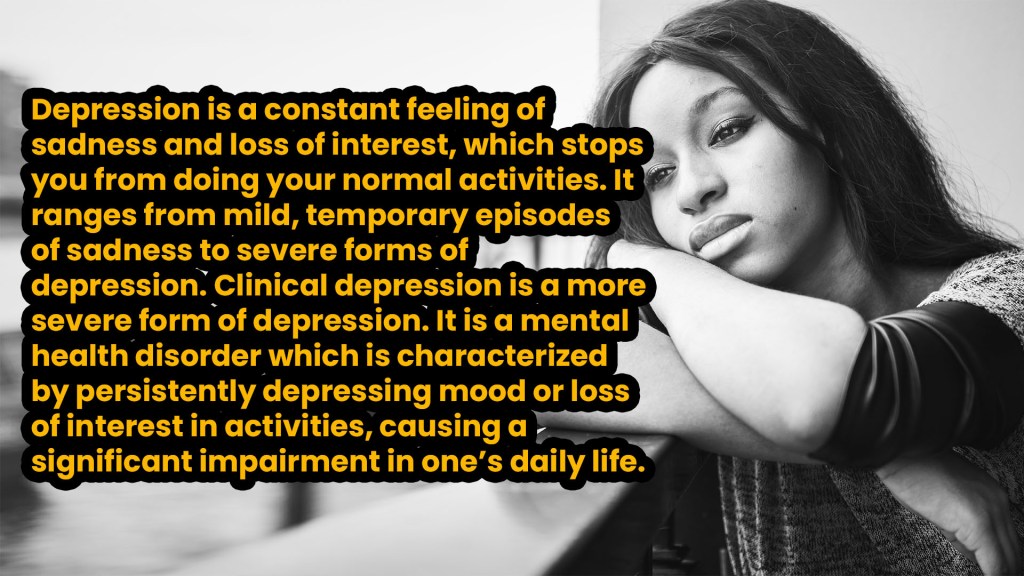
Depression is a constant feeling of sadness and loss of interest, which stops you from doing your normal activities. It ranges from mild, temporary episodes of sadness to severe forms of depression. Clinical depression is a more severe form of depression. It is a mental health disorder which is characterized by persistently depressing mood or loss of interest in activities, causing a significant impairment in one’s daily life. Some people experience this condition once in their lifetime while others experience it several times in their life.
The possible causes of clinical depression are a combination of biological, psychological, and social sources of distress. While mild depression makes you feel you are in low spirits persistently; severe depression may make you feel suicidal. It can make you feel like life is not worth living anymore. Individuals who suffer from clinical depression may express angry outbursts or may feel frustrated over small matters. They may also experience unexplained physical symptoms like headache and may also have memory and concentration problems. Some individuals who suffer from this condition may also experience weight loss or gain due to changes in their appetite. Other symptoms include drastic change in sleeping pattern and suicidal thoughts or a death wish, lack of energy, low mood, and feelings of hopelessness, stress and anxiety.
Women are at a high risk of being diagnosed with clinical depression. Hormonal changes during puberty, menstruation, pregnancy, miscarriage, and menopause, may increase risk. Some situations that boost risk in biologically vulnerable women are, raising a child alone, balancing family life with career and caring for an ageing parent. In men, depression is underreported. This is because men who experience this condition are less likely to seek help or even talk about it. Signs of clinical depression in men may include anger, irritability, and substance abuse.
Anxiety Disorder
This is a type of mental condition that causes a person to respond to certain things and situations with fear and dread. Anxiety disorder is different from the occasional anxiety which is normal. Anxiety is a normal emotion. It is your brain’s way of reacting to stress and alerting you of potential danger ahead. With anxiety disorders, a person experiences constant and overwhelming anxiety and fear that reach a peak within minutes. This peak is what is commonly known as a Panic Attack. This experience can make you avoid social situations like work, school and family gatherings that may worsen or trigger your symptoms.

Some common symptoms are feeling nervous or restless, trembling, sweating, breathing rapidly, insomnia, having difficulty controlling worry and having an increased heart rate. To avoid the impact of these symptoms, quickly get help; consult a doctor. Be active and take part in activities that will keep your mind off things that make you worry a lot. Also, avoid substance abuse. Abusing alcohol or drugs can make you develop an anxiety disorder, or worsen it (if you already have a condition).
Know that, both Clinical Depression and Anxiety Disorder are treatable. When you start seeing any symptoms of these conditions we have talked about today, quickly consult a doctor. Do not be shy to get help. You cannot get over these conditions easily, and on your own. Remember that a healthy mind in a healthy body, equals total wellbeing.
 Dialogue Genitalia - Ghana
Leave a comment