In this second part of our series celebrating Menstrual Hygiene Day, we will be looking at Menstrual Health and Hygiene which is also known as Menstrual Hygiene Management. This term can be defined as women and adolescent girls using clean menstrual management materials to absorb or collect blood that can be changed in privacy as often as necessary for the duration of the menstrual period, using soap and water for washing the body, and having access to the facilities to dispose of used menstrual management materials.
In Ghana, the most commonly used menstrual supplies are disposable sanitary pads and there are a variety of brands on the market. They are easily purchased at convenience shops and pharmacies. Unfortunately, adolescent girls in poor areas of Ghana are unable to purchase disposable sanitary pads to use during their period. Makeshift supplies like toilet roll, cotton wool, and strips of old cloth are folded into the crotch of the underwear and worn. Since these makeshift supplies are not firmly secured in the underwear, they shift when you move and you are prone to soiling yourself. Adolescent girls who use these kinds of sanitary supplies, are unable to take part in social activities because of the embarrassment that comes with soiling themselves in public. In extreme cases, adolescent girls under this condition avoid going to school when they are having their period. Some girls even drop out of school and this is a great cause for concern.
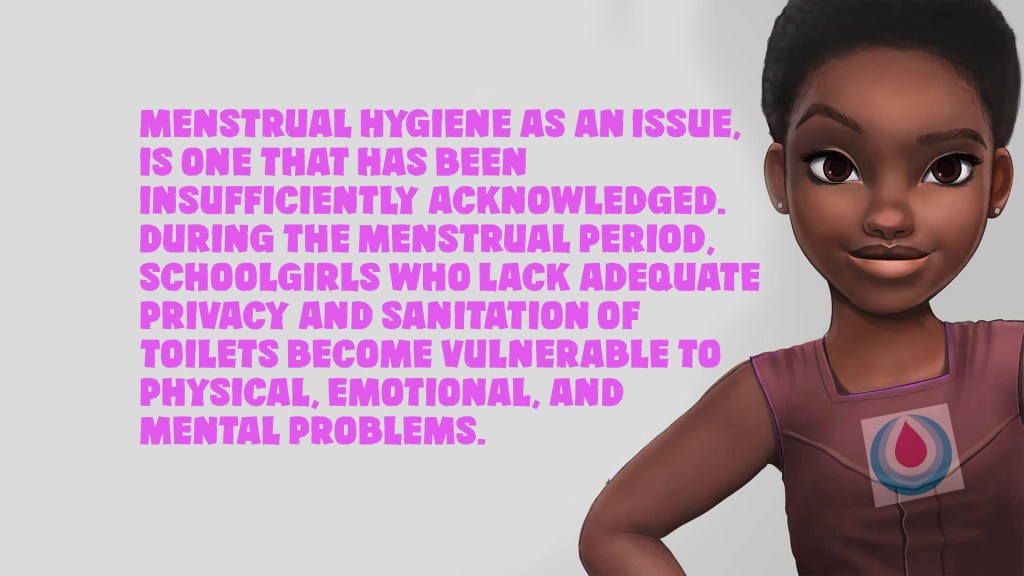
Menstrual hygiene as an issue, is one that has been insufficiently acknowledged. During the menstrual period, schoolgirls who lack adequate privacy and sanitation of toilets become vulnerable to physical, emotional, and mental problems. The lack of knowledge in menstrual hygiene management in some adolescent girls, results in repeated use of unclean menstrual absorbents which lead to the harboring of micro-organisms that increase susceptibility to urinary, perineal, vaginal, and pelvic infections. Studies have shown that good menstrual hygiene is practiced more among those whose mothers are literate and that reaction to menstruation depends upon knowledge and awareness regarding menstruation. In some situations, strong bondage with taboos and traditional beliefs together with social prohibitions during menstruation and hesitation of parents in discussing the related issues openly with their adolescent daughters, has blocked access to the right kind of information regarding menstrual hygiene. Some taboos inhibit adolescent girls and women who are menstruating from using the usual water resources or toilets used by the rest of the family and yet these are not provided specially for them as well.
Some girls are not able to get the kind of privacy needed during menstruation when they are in school or at home. This results in the practice of unhygienic menstrual management. Girls who must use a strip of cloth during their menses, sometimes hide them in unhygienic places like wall crevices and ceiling panels after it has been washed. They do this to keep the cloth from prying eyes but do not sanitize them before the next use. Having your period is not something to be ashamed of. It is a natural phenomenon. Whether you have the means to purchase sanitary pads or have to make do with toilet roll, cotton wool, or strips of cloth, you need to practice proper menstrual hygiene to avoid any health-related issues.

In our final blog for this series, we will discuss practical ways through which proper menstrual hygiene can be maintained. If you experience shame and embarrassment or any psychological issue anytime you are in your period, and need professional psychological assistance, do not hesitate to reach out to DGG’s psychological team for assistance. Share this article, like it on our social media platforms, and look forward to our next blog.
Happy Menstrual Hygiene Day!
 Dialogue Genitalia - Ghana
Leave a comment