Menstrual Hygiene Day, which is observed worldwide, is annually celebrated on the 28th of May. The first Menstrual Hygiene Day (MHD) was observed on 28th May in 2014.
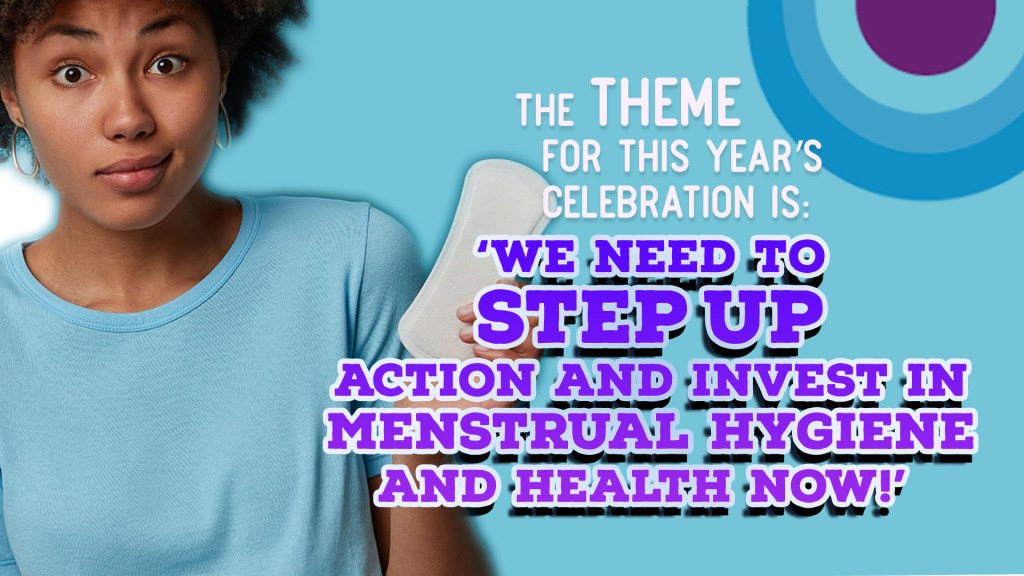
The importance of MHD is to break taboos surrounding menstruation and raise awareness of the importance of good menstrual hygiene management worldwide. On this day, information on menstrual hygiene management is publicized in the media, including social media. The theme for this year’s celebration is: ‘We need to step up action and invest in menstrual hygiene and health now!’ We at Dialogue Genitalia Ghana are doing our part by bringing you this series on Menstruation and Menstrual Hygiene. Let’s start off by looking at the Menstrual Cycle.
The Menstrual Cycle
The menstrual cycle occurs in females between the onset of puberty and menopause. The length of a menstrual cycle varies considerably from one woman to the other but it lasts for about an average of 28 days. Menstruation (commonly known as period or menses) is the periodic flow of blood from the inner lining of the uterus through the vagina. The menstrual flow is partly blood and partly tissue from inside the uterus. The first occurrence of menstruation is known as menarche. Menarche may occur between the ages of 10 and 16. After the menarche, the adolescent girl experiences irregular periods. You should not be bothered when you start experiencing these period irregularities. As time goes by, regularity is established; within 4 to 6 years of the menarche (by the age of 17 to 19), a regular menstrual pattern is established.
When you start your period, the first thing you will notice is a spot of blood in your underwear or when you visit the washroom. The flow of blood from your vagina is usually light at first and may get heavier for a few days before tapering off. The blood may be a brownish color at first and then turn brighter red. Your period will usually last 3 to 7 days each month. The menstrual cycle is considered to start on the first day of menstruation, and to end the day before the next menstruation starts. It includes the days when you are bleeding and the interval between each menstrual period. To make it easy for you to know your menstrual pattern and also prepare for your next period, it is best to start counting from the first day of menstruation to when the next period starts. You can note this on a calendar or jot it down in a journal.

Menstruation can come with added issues for adolescent girls and young women. These include:
- Pre-Menstrual Syndrome (PMS)
PMS is a condition that affects a female’s emotions, physical health, and behaviour during certain days of the menstrual cycle, generally just before her menses. In the days before you start your period, you may feel tense or emotional. You may gain weight and feel bloated. You may have pain (cramps) in your abdomen, back, or legs that lasts a few hours or more. Your breasts may be tender, and your face may break out in pimples or acne.
- Dysmenorrhea
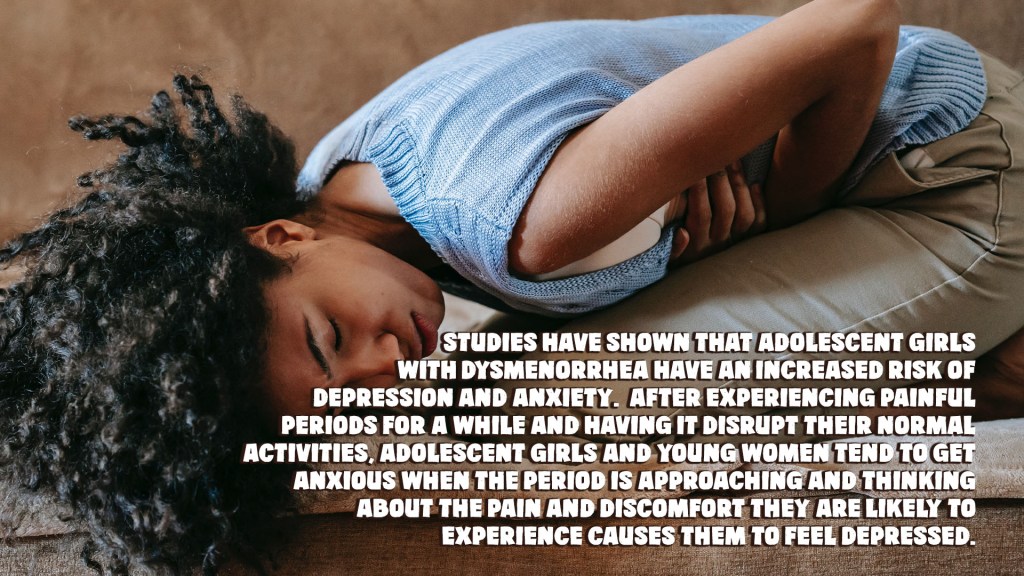
Dysmenorrhea is a condition associated with PMS. It is a medical term for painful menstrual periods or menstrual cramps. Some young girls and adolescents experience very painful periods which make them unable to perform their normal activities. The pain usually begins one or two days before you get your period or when bleeding actually starts. You may feel pain ranging from mild to severe in your lower abdomen, back or thighs. Pain can typically last 12 to 72 hours, and you might have other symptoms, such as nausea and vomiting, fatigue, and even diarrhea. Apart from these physical effects, there are associated psychological effects. Studies have shown that adolescent girls with dysmenorrhea have an increased risk of depression and anxiety. After experiencing painful periods for a while and having it disrupt their normal activities, adolescent girls and young women tend to get anxious when the period is approaching and thinking about the pain and discomfort they are likely to experience causes them to feel depressed.
We hope you have found this article helpful. Please reach out to the DGG team for professional assistance, if you have any questions or concerns. If you are experiencing psychological problems relating to PMS and dysmenorrhea, our psychological team can be of immense help to you free of charge. Just let us know how we can help you. Share this article, like it on our social media platforms, and look forward to our next blog on Menstrual Hygiene.
 Dialogue Genitalia - Ghana
Leave a comment