Today, we begin our series on Sexually Transmitted Infections by looking at the most common virus known to human beings – HIV/AIDS. It is considered as the most common STI/STD among women and men. Globally, approximately 37 million people are living with HIV, with about 70% of these living in Sub-Saharan Africa. Various studies across the world suggest a high rate of HIV/AIDS cases among young people aged 15–24 years, with females being the most affected. Data from these surveys suggest that 91% of reported global HIV-positive cases among children can be found in Africa. Due to the high incidence of HIV cases in the region, Sub-Saharan Africa is considered as the epicenter of the global pandemic. A survey conducted in 2016 in Ghana indicated a prevalence rate of 2.4%.
HIV (Human Immunodeficiency Virus) is a virus that targets and damages the body’s immune system (cells that help the body fight infection). Over time, the body’s immune system begins to fail, making an individual more susceptible to other infections and diseases. AIDS (Acquired Immunodeficiency Syndrome) is the most advanced stage of infection of HIV. Without medical attention, the condition becomes chronic and tends to be fatal. HIV is a sexually transmitted infection (STI). That is to say that the virus is usually transmitted through sexual contact with a person with HIV. However, it can also be spread through contact with infected blood from sharing injection drug equipment or from mother to child during pregnancy, childbirth or breast-feeding.The first signs of HIV infection include swollen glands and flu-like symptoms, which may come and go within a month or two after infection. During this phase, which is known as Acute HIV, the infected individual may suffer from the following symptoms: fever, headache, muscle aches and joint pain, rashes on the skin, sore throat and painful mouth sores, swollen lymph glands (usually on the neck), diarrhea, unexplained weight loss, cough.

These symptoms may be experienced in mild to moderate levels, however, the viral load of the infected person at this stage is very high and infectious. Severe symptoms may not appear until several months later. During this phase, which is known as chronic HIV, the virus continues to multiply in the body, causing extensive damage to the white blood cells. This leads to the development of infections and diseases such as tuberculosis, pneumonia, thrush, Cryptococcal meningitis (an infection which causes inflammation of the central nervous system), liver and kidney diseases as well as cancers.
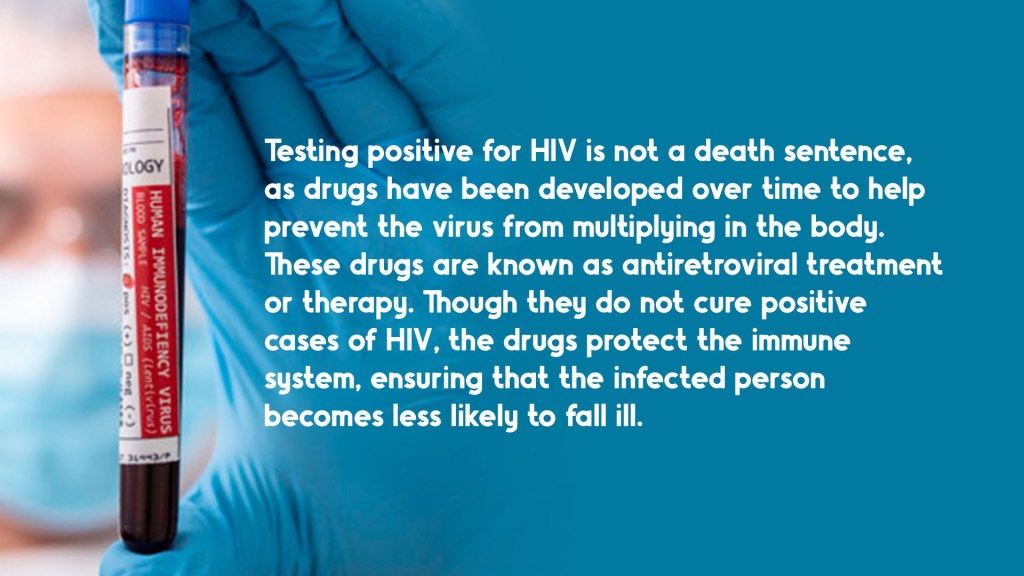
A blood test is usually the most common way to know your HIV status. The blood test detects antibodies to the virus that the body creates in an attempt to fight the virus. It is recommended that sexually active persons should get tested occasionally. Even though there is no cure for HIV/AIDS, early testing is crucial in the treatment of complications and infections associated with the virus and it can also help curb high-risk behavior that can spread the virus to others. Testing positive for HIV is not a death sentence, as drugs have been developed over time to help prevent the virus from multiplying in the body. These drugs are known as antiretroviral treatment or therapy. Though they do not cure positive cases of HIV, the drugs protect the immune system, ensuring that the infected person becomes less likely to fall ill.
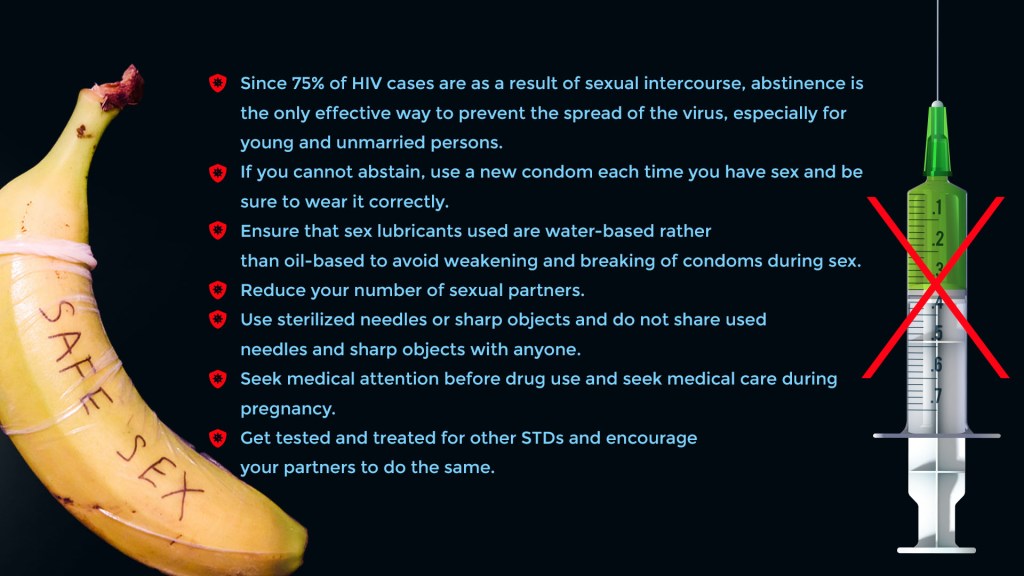
HIV/AIDS cannot be prevented with a vaccine; however, the following lifestyle changes can help the prevention or the spread of the virus:
- Since 75% of HIV cases are as a result of sexual intercourse, abstinence is the only effective way to prevent the spread of the virus, especially for young and unmarried persons.
- If you cannot abstain, use a new condom each time you have sex and be sure to wear it correctly.
- Ensure that sex lubricants used are water-based rather than oil-based to avoid weakening and breaking of condoms during sex.
- Reduce your number of sexual partners.
- Use sterilized needles or sharp objects and do not share used needles and sharp objects with anyone.
- Seek medical attention before drug use and seek medical care during pregnancy.
- Get tested and treated for other STDs and encourage your partners to do the same.
Do join us in our subsequent posts as we discuss other STIs, their psychological implications and preventive measures as well as the treatment options that are available to combat STDs.
 Dialogue Genitalia - Ghana
Leave a comment