Sexual and Reproductive Health and Rights are essential fundamental human rights applicable to every human in the world, regardless of their impairment, age, gender, ethnicity, race, and religion. They include the right to enjoy sexual relationships and to choose with whom to have those relationships with, the freedom to make well-informed decisions and choices in matters relating to reproduction and sexuality, and the freedom to practice healthy and safe reproduction and sexuality. There is also the freedom to reproduce and regulate one’s fertility, as well as the need to respect the decisions and choices made by others concerning reproduction and sexuality.
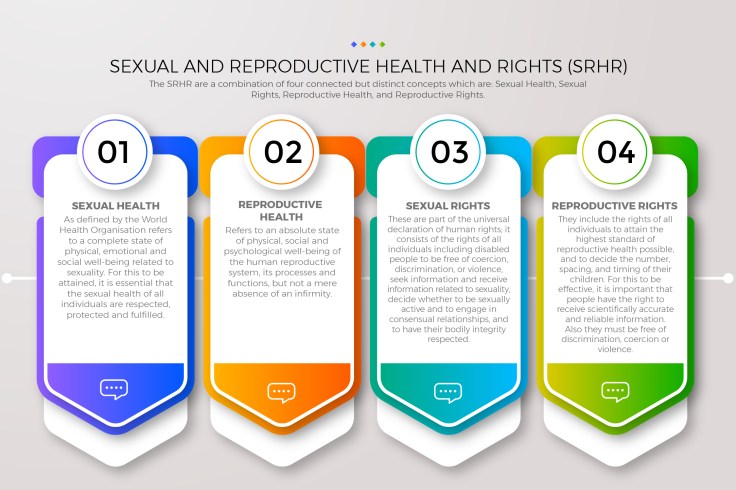
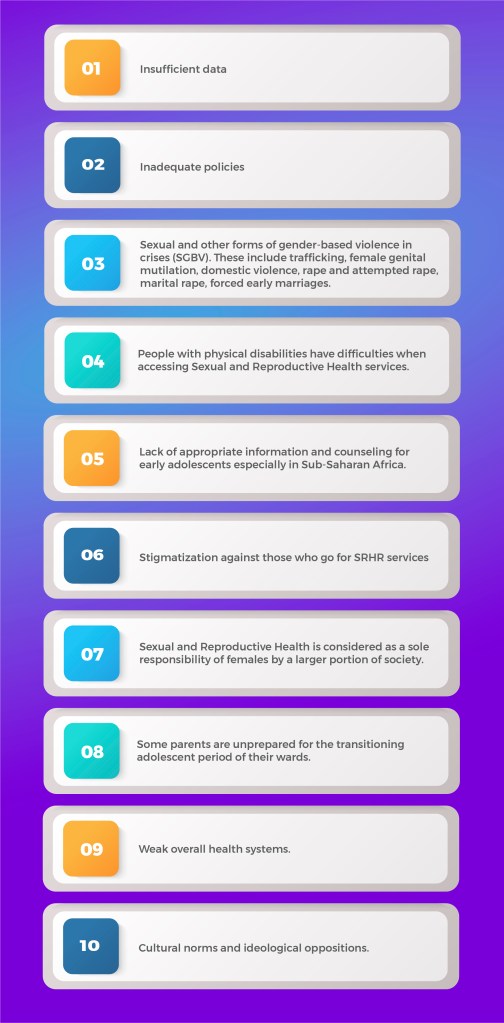
Sexual and Reproductive Health and rights promote gender equality and give minority groups such as the disabled and the LGBTQI+ the opportunity to access sexual and reproductive health services. They also help in slowing down the spread of HIV/AIDS, stabilizing population growth, and reducing poverty. However, in the process of promoting Sexual and Reproductive Health Services, there are some challenges which affect their provision, especially for adolescents across the world. These include:
To promote SRHR services in the country, the government of the Republic of Ghana has put in place some measures to create awareness, and to also promote sexual and reproductive health services.
- Foremost, Female Circumcision has been changed to Female Genital Mutilation, portraying the dehumanizing nature of the act by the Criminal Code (Amendment) Act 2007, Act 741. Hence considered a criminal offence punishable by the law.
- The minimum age of marriage recognized by the Children’s act is age 18. Therefore, marriage before that age is deemed as a violation of human rights that compromises the socio-economic development of a girl, and is punishable by the law.
- The Domestic Violence Act has instituted criminal sanctions as well as civil remedies for victims of domestic violence and perpetrators. For example rape in marriage, defilement, incest, harmful widowhood rites, abduction, unnatural carnal knowledge, carnal knowledge of idiotic females and customary servitude.
- The Provisional National Defence Council Law (PNDCL) of 1985 which amended Act 29, sections 58 of the Criminal Code of 1960 states that abortion is legally permissible if only the pregnancy is as a result of rape, incest or a threat to the mother and the foetus.
- To address the prevention of unsafe abortion, post-abortion care has been introduced which includes:
- Creation of public awareness of the dangers associated with unsafe abortions.
- Midwives and doctors have been equipped with the necessary requisite skills.
- Prevention of unwanted pregnancies and education of clients on the complications of abortion.
- Decentralizing Manual Vacuum Aspiration (MVA) services to the district level.
- The HIV/AIDS strategy and policy such as the ‘treat all’ policy which aims at reducing new HIV infections in Key Populations (KPs), and also increase retention in care and adherence to treatment.
- Prevention and treatment of Reproductive Tract Infections (RTI)
- Prevention and management of infertility.
- Prevention and treatment of cancer such as cervical, breast, prostate and testicular.
These are all commendable initiatives, laws and policies, and the appropriate institutions need to ensure that they are all upheld and put to action. Both governmental and non-governmental organizations have a huge role to play, and there is much more room for improvement.
 Dialogue Genitalia - Ghana
Leave a comment